
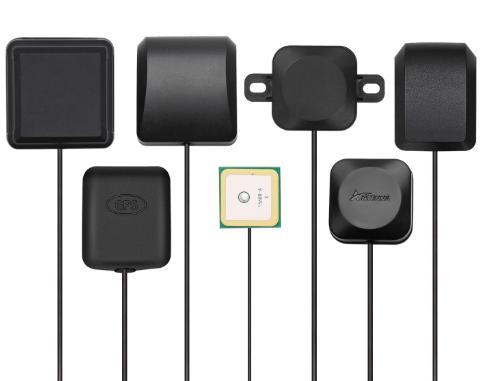
GNSS Positioning places its own demands on the antenna: the link budget, the interference environment and the physical install all differ from a generic antenna polarization explained deployment. This page works through those requirements and maps them onto specific models.
What the application demands
GNSS reception is a noise-figure problem. An active antenna with a good LNA, a clean view of the sky, and a ground plane large enough to reject multipath from below will outperform a higher-gain part placed badly.
Turning that into a specification
- Take the operating band from the radio datasheet, including any guard at the band edges.
- Decide the coverage shape first, omnidirectional or sector, and only then take the highest gain that still fits it.
- Measure the feedline run and subtract its loss before comparing antenna gain figures.
- Confirm the connector on the radio and order the matching interface rather than adapting in the field.
- Confirm the receiver supplies the DC bias the active antenna needs, and check the voltage matches.
Models used for GNSS Positioning
| Model | Band (MHz) | Gain | Polarization | Length | Connector |
|---|---|---|---|---|---|
| AW-GP1575-28 | 1575–1606 | 28 dBi | RHCP | 50 mm | SMA-Male |
| AW-CP-BD-2535 | 1561–1606 | 28 dBi | RHCP | 25 mm | IPEX MHF (U.FL) |
| AW-CP-GPS-2525A | 1575–1576 | 28 dBi | RHCP | 25 mm | IPEX MHF (U.FL) |
| AW-CMB-5-5GGPSWIFI | 617–5850 | 4x4 / 28 / 2x5 dBi | Vertical + RHCP | 150 mm | SMA-Male ×7 |
| AW-CP-GPS-2525 | 1575–1576 | 4 dBi | RHCP | 25 mm | Solder pad |
| AW-CMB-2-4GGPS | 698–2700 | 3 / 28 dBi | Vertical + RHCP | 78 mm | SMA-Male + SMA-Male |
| AW-CMB-3-4GGPSWIFI | 698–5850 | 3 / 28 / 4 dBi | Vertical + RHCP | 96 mm | SMA-Male ×3 |
| AW-CP-GPS-1818 | 1575–1576 | 3 dBi | RHCP | 18 mm | Solder pad |
| AW-CMB-4-MIMOGPS | 698–2700 | 2x3 / 28 dBi | Vertical / MIMO + RHCP | 120 mm | SMA-Male ×3 |
| AW-CP-BD-MINI-1212 | 1561–1606 | 2 dBi | RHCP | 12 mm | Solder pad |
| AW-CP-GPS-1212 | 1575–1576 | 2 dBi | RHCP | 12 mm | Solder pad |
Grounding and surge protection
Polarization choice does not affect lightning protection, which is governed by mechanical mounting and grounding.