
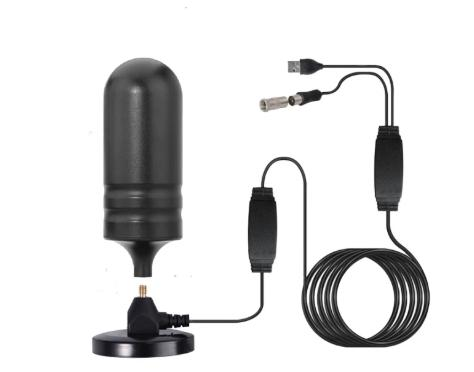
Mounting decides more of the delivered performance than the datasheet gain does. This page covers rooftop mast / balcony installs for antenna lightning protection: what the mount has to survive, how the feedline should be routed, and which models are built for it.
What the mount has to carry
Rooftop masts carry both wind and ice load, and the guying or the base plate has to be sized for the whole array. On a domestic roof the fixing into the structure is usually the weakest element. The longest model on this page is 1450 mm, which is the figure to size the bracket against.
Feedline and connector
A long rooftop run is where feedline loss turns into a design problem. Price a lower-loss cable against the higher-gain antenna before choosing; often the cable is the better spend.
Sequence on site
- Confirm the antenna band and connector against the radio before anything goes up.
- Dry-fit the bracket and check clearance to structure, cable trays and other antennas.
- Set the mast plumb and guy or bolt it for the full ice and wind load.
- Bond the mast and fit the surge arrestor at the entry point.
- Terminate and seal the connector, then check VSWR at the radio end before closing anything up.
- Record the model, serial and install position for the site file.
Models built for rooftop mast / balcony
| Model | Band (MHz) | Gain | Polarization | Length | Connector |
|---|---|---|---|---|---|
| AW-TV-UHF-17 | 470–862 | 17 dBi | Horizontal | 1250 mm | F-Female |
| AW-LP4386-13 | 430–860 | 13 dBi | Vertical | 1450 mm | N-Female |
| AW-LP0838-12 | 800–3800 | 12 dBi | Vertical | 760 mm | N-Female |
| AW-TV-VU-12 | 174–862 | 12 dBi | Horizontal | 980 mm | F-Female |
| AW-LP0827-11 | 698–2700 | 11 dBi | Vertical | 640 mm | N-Female |
| AW-LP1727-10 | 1710–2700 | 10 dBi | Vertical | 380 mm | N-Female |
| AW-LP0827-9 | 806–2700 | 9 dBi | Vertical | 480 mm | N-Female |
| AW-LP0858-2x11 | 800–5800 | 2x11 dBi | Dual ±45° slant | 700 mm | N-Female |