
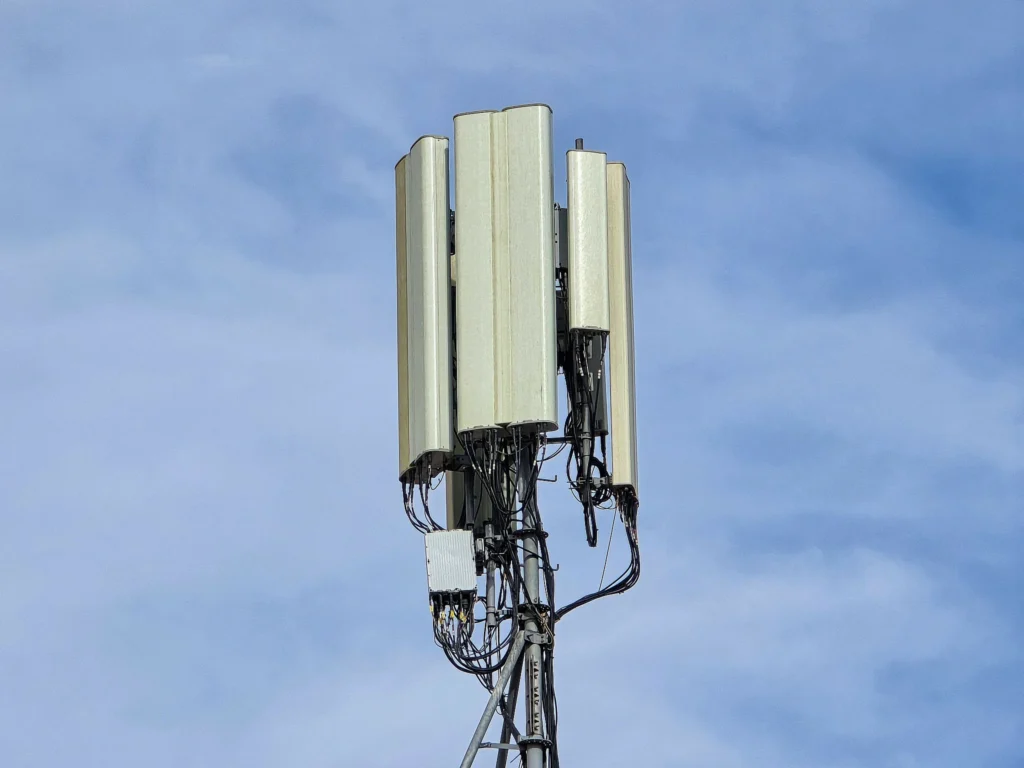
Underground mining and tunnel coverage relies on distributed antenna systems and directional antennas that channel RF along confined, signal-hostile galleries where free-space propagation does not apply.
Overview
This guide explains how mining and tunnel coverage antennas are engineered, where they are deployed, and how to choose the right model for a real installation. In a tunnel the structure acts as an oversized waveguide; directional antennas fired down the bore, or radiating cable for long runs, carry signal much farther than an omnidirectional antenna would.
Frequency Bands and Spectrum
The bands most relevant to mining and tunnel coverage antennas are listed below. Each band brings different propagation, regulatory and antenna-size implications.
| Band | Range (MHz) | Typical use |
|---|---|---|
| 700-900 MHz (4G Low Band) | 698-960 | LTE Band 12/13/5, cellular |
| Wideband (700-2700 MHz) | 700-2700 | Multiband / all-cellular |
| 1.8 GHz (LTE Band 3) | 1710-1880 | GSM-1800 / LTE Band 3 |
| 2.3-2.7 GHz (TDD-LTE) | 2300-2700 | TDD-LTE / WiMAX / CBRS edge |
Recommended Antenna Types
The following antenna classes are best matched to mining and tunnel coverage antennas:
Indoor DAS Antenna
Ceiling dome and wall-panel antennas for in-building distributed antenna systems (DAS).
Directional Panel Antenna
Sector / panel antennas delivering focused gain over a defined azimuth, used for base-station sectorization and fixed point-to-multipoint links.
Yagi-Uda Antenna
High front-to-back ratio directional antennas for long-range point-to-point links and fixed CPE.
Applications and Use Cases
Mining and Tunnel Coverage Antennas support a range of deployments. The most common are:
- In-Building DAS
- Public Safety / Land Mobile Radio
- In-Building Coverage
Mounting and Installation
Antennas are wall- or back-mounted in the crown of the tunnel, protected from machinery, with cabling routed in conduit.
Lightning Protection and Grounding
Surface head-frame antennas need conventional lightning protection; underground antennas are shielded by the rock mass.
Standards and Compliance
Designs and deployments in this area commonly reference:
- NFPA 1221 in-building public safety
- 3GPP LTE bands
- MSHA equipment requirements
Selection and Comparison
When narrowing down a model for mining and tunnel coverage antennas, weigh these trade-offs:
- DAS vs. radiating cable
- Directional vs. omni in-bore
- Public-safety vs. operations band
Typical gain for this category is 9-18 dBi, usually terminated in a N-Female connector, though the interface can be customized.
Recommended Antennas from astronwireless.com
The following models from our catalog match the requirements discussed above:
AW-ID0827-11
- Band: 0.7-2.7 GHz
- Gain: 11 dBi
- Polarization: Vertical
AW-ID0827-3
- Band: 0.8-2.7 GHz
- Gain: 3 dBi
- Polarization: Vertical
AW-ID0827-5
- Band: 0.8-2.7 GHz
- Gain: 5 dBi
- Polarization: Vertical
AW-ID0827-9
- Band: 0.7-2.7 GHz
- Gain: 9 dBi
- Polarization: Vertical
AW-PA1722-V12B65
- Band: 1.7-2.2 GHz
- Gain: 12 dBi
- Polarization: Vertical
AW-PA1722-V15B65
- Band: 1.7-2.2 GHz
- Gain: 15 dBi
- Polarization: Vertical
Related Topics
Find Your Antenna
Specify your exact requirements and get a matched recommendation:
Antenna Configurator
Specify your requirements and get a matched antenna recommendation in seconds.
Advanced filters (dimension limits)
Mining and Tunnel Coverage Antennas in depth
The pages below break mining and tunnel coverage antennas down by band, by antenna class, by application and by how the antenna gets mounted, each with the catalog models that apply.
By frequency band
- 700-900 MHz (4G Low Band) Mining and Tunnel Coverage AntennasThe 700-900 MHz (4G Low Band) segment spans 698 to 960 MHz and is used for lte band 12/13/5, cellular.…144 models
- Wideband (700-2700 MHz) Mining and Tunnel Coverage AntennasThe Wideband (700-2700 MHz) segment spans 700 to 2700 MHz and is used for multiband / all-cellular. Wavelength at the…185 models
- 1.8 GHz (LTE Band 3) Mining and Tunnel Coverage AntennasThe 1.8 GHz (LTE Band 3) segment spans 1710 to 1880 MHz and is used for gsm-1800 / lte band…125 models
- 2.3-2.7 GHz (TDD-LTE) Mining and Tunnel Coverage AntennasThe 2.3-2.7 GHz (TDD-LTE) segment spans 2300 to 2700 MHz and is used for tdd-lte / wimax / cbrs edge.…146 models
By antenna type
- Indoor DAS Antenna for Mining and Tunnel Coverage AntennasCeiling dome and wall-panel antennas for in-building distributed antenna systems (DAS). This page covers how the class behaves specifically in…4 models
- Directional Panel Antenna for Mining and Tunnel Coverage AntennasSector / panel antennas delivering focused gain over a defined azimuth, used for base-station sectorization and fixed point-to-multipoint links. This…23 models
- Yagi-Uda Antenna for Mining and Tunnel Coverage AntennasHigh front-to-back ratio directional antennas for long-range point-to-point links and fixed CPE. This page covers how the class behaves specifically…6 models
By application
- Antennas for In-Building DASIn-Building DAS places its own demands on the antenna: the link budget, the interference environment and the physical install all…12 models
- Antennas for Public Safety / Land Mobile RadioPublic Safety / Land Mobile Radio places its own demands on the antenna: the link budget, the interference environment and…25 models
- Antennas for In-Building CoverageIn-Building Coverage places its own demands on the antenna: the link budget, the interference environment and the physical install all…7 models
By installation
- Mining and Tunnel Coverage Antennas accessory / componentMounting decides more of the delivered performance than the datasheet gain does. This page covers accessory / component installs for…80 models
- Mining and Tunnel Coverage Antennas outdoor, pole-mountedMounting decides more of the delivered performance than the datasheet gain does. This page covers outdoor, pole-mounted installs for mining…45 models
- Mining and Tunnel Coverage Antennas embedded / internalMounting decides more of the delivered performance than the datasheet gain does. This page covers embedded / internal installs for…17 models
Selection and reference
- How to Choose Mining and Tunnel Coverage AntennasChoosing mining and tunnel coverage antennas is a sequence of constraints, not a search for the highest number on the…
- Mining and Tunnel Coverage Antennas Specification ComparisonA side-by-side table of every mining and tunnel coverage antenna in the catalog, sorted so the gain-versus-size trade-off is visible…
- Mining and Tunnel Coverage Antennas: Common QuestionsThe questions that come up most often in mining and tunnel coverage antennas enquiries, answered with the numbers rather than…