
Straits Research Releases Base Station Antenna Market Forecast Through 2034
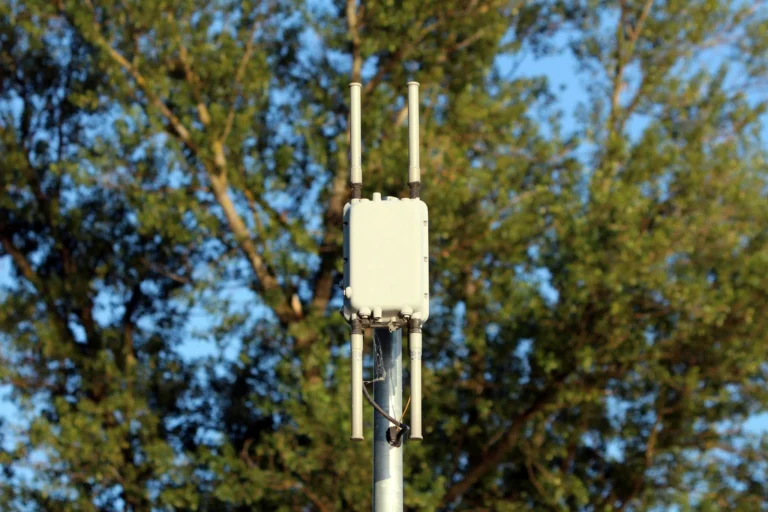
Network planning divisions and procurement teams across the telecommunications sector are incorporating long-range market projections into their infrastructure roadmaps, as a new forecast extends visibility for base station antenna investments through 2034. The report, published by Straits Research, dissects market size, share, and growth trajectories for antennas deployed in cellular base stations globally, offering granularity across frequency bands, technology types, and geographies.
Report Coverage and Analytical Framework
Straits Research structured the study to quantify how 5G densification, spectrum refarming, and evolving antenna architectures will reshape demand over the coming decade. The analysis segments the market by antenna type—including omnidirectional, sector, and panel—as well as by technology, with particular attention paid to MIMO and Massive MIMO configurations. Each segment is assessed against regional deployment patterns, vendor landscapes, and operator capital expenditure trends.
Macroeconomic variables such as raw material costs and trade policies are also factored into the modelling, giving stakeholders a nuanced view of potential headwinds. The forecast period, ending in 2034, covers the typical lifecycle of network infrastructure upgrades and allows operators to align procurement cycles with anticipated technology shifts.
MIMO Antenna Evolution Driving Demand
Multiple-input multiple-output antenna systems remain a central focus of the study. Base stations increasingly rely on advanced MIMO arrays to boost spectral efficiency and capacity, particularly in dense urban environments where site acquisition is constrained. The transition from 8T8R to 32T32R and 64T64R Massive MIMO antennas, as outlined in 3GPP Release 15 and subsequent updates, is identified as a primary growth catalyst.
Manufacturers are tuning antenna designs for mid-band frequencies such as n78 (3.3–3.8 GHz) and C-band (3.7–3.98 GHz), where wide carrier bandwidths enable multi-gigabit throughput. Reference designs like the 806-960 MHz directional panel antenna continue to serve essential roles in lower-band coverage, while new multi-band, multi-port units consolidate footprint and reduce wind loading on towers. The report notes that this dual-track evolution—maintaining legacy bands while expanding into higher spectrum—will require suppliers to maintain diverse product portfolios.
5G Rollouts and Infrastructure Upgrades
Network operators are accelerating standalone (SA) 5G deployments, which demand tighter beamforming control and active antenna units that integrate radio and antenna elements. Straits Research correlates the pace of SA core deployments with the market for beamforming-capable base station antennas, highlighting that Asian and North American markets currently lead in adoption.
Site-sharing agreements and neutral-host models are additionally shaping procurement patterns. Rather than single-operator deployments, shared sites often require antennas with wider azimuth coverage and increased inter-band isolation. Compliance with updated electromagnetic field (EMF) emission standards and municipal zoning regulations is also pushing manufacturers to develop compact, visually unobtrusive designs that meet stringent performance benchmarks.
Regional Dynamics and Competitive Landscape
The report breaks out regional markets, noting that Asia-Pacific accounts for the largest volume of base station antenna shipments, driven by nationwide 5G infrastructure programs in China and India. Europe follows, where the focus is on replacing aging 3G and 4G antennas with multi-band 5G-ready units as part of the European Commission’s Digital Decade targets.
North America’s growth is propelled by private network deployments in industrial verticals and ongoing millimeter-wave small-cell expansions. Competition among antenna vendors remains intense, with established players and emerging Chinese manufacturers vying on price, innovation, and supply-chain resilience. The research underscores that local content requirements in some markets are reshaping vendor partnerships and manufacturing footprints.
Supply-Chain Considerations and Material Sourcing
A dedicated section of the Straits Research study evaluates supply-chain vulnerabilities affecting base station antenna production. Dielectric materials, advanced composites, and precision-machined RF components are subject to lead-time fluctuations and geopolitical trade restrictions. The report suggests that antenna manufacturers are increasingly diversifying their supply bases and investing in automated assembly to mitigate risks.
Additionally, the shift toward active antenna systems that integrate more electronic components increases the bill of materials, tying the market more closely to semiconductor availability. These procurement dimensions are expected to influence pricing stability and the pace of technology upgrades over the forecast period.
Implications for Network Operators and Antenna Suppliers
Operators that align their sourcing strategies with the report’s projections may secure preferential pricing and guarantee interoperability with future 3GPP feature releases. Antenna suppliers, on the other hand, can use the data to prioritize R&D investments and capacity expansions. The 2034 horizon also offers regulators a framework for evaluating spectrum allocation plans against expected antenna technology evolution.
Key Figures
This story includes concrete figures such as 2034. The points below pull out the key numbers so the reporting is easier to scan and verify.
- Forecast horizon: 2034 Base station antenna market projections extend through the year 2034.
Why This Matters
Accurate long-range forecasts are essential for telecom operators planning multi-billion-dollar 5G rollouts and for antenna manufacturers deciding where to allocate R&D resources. This report provides a structured view of how MIMO and Massive MIMO technologies will evolve, directly influencing procurement strategies, supply-chain decisions, and competitive positioning across the wireless infrastructure sector.
FAQ
Who published the base station antenna market report?
The report was published by Straits Research, a market research and consulting firm that provides strategic analysis across multiple industries, including telecommunications.
What technologies are highlighted in the base station antenna forecast?
The study emphasizes MIMO and Massive MIMO antenna systems, beamforming-capable active antennas, and multi-band designs essential for 5G deployment across low, mid, and high spectrum bands.
Which regions are expected to drive demand for base station antennas?
Asia-Pacific is projected to lead in shipment volumes, followed by Europe and North America, each driven by national 5G programs, infrastructure modernization, and private network expansions.
How does the report address supply-chain challenges for antenna manufacturers?
It evaluates risks tied to raw material sourcing, semiconductor availability, and trade restrictions, suggesting that diversified supply bases and automated assembly investments will be critical for resilience.
Sources
Source: "MIMO antenna" – Google News