
Amphenol FLEX50 Micro-Coax Addresses Space Constraints in 5G Antenna Development
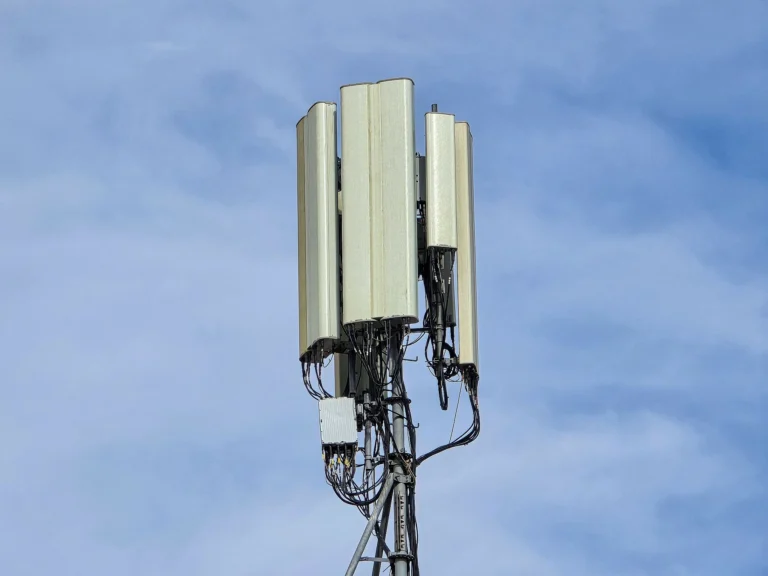
The rollout of fifth-generation wireless networks has placed unprecedented demands on RF component design. Antenna systems, in particular, must deliver high gain and wide bandwidth while fitting into increasingly compact enclosures. Against that backdrop, Amphenol’s FLEX50 micro-coaxial cable is gaining attention for its ability to enable tighter packing and more flexible routing inside next-generation antenna assemblies.
The Challenge of Miniaturization in 5G
Network operators continue to densify their infrastructure to meet coverage and capacity targets. Massive MIMO arrays and beamforming radios now pack dozens of transceiver paths into a single housing, leaving very little room for interconnections. Traditional semi-rigid coax can be difficult to route in such confined spaces, often forcing design compromises that sacrifice electrical performance or add assembly complexity.
Designers need cables that maintain phase stability and low insertion loss even when bent around tight corners. At the same time, the cable must withstand the thermal and mechanical stresses typical of outdoor base station environments. Those factors make the interconnect selection a critical decision early in the design cycle.
Amphenol FLEX50: Flexibility and Performance
The FLEX50 series from Amphenol addresses these issues with a construction that combines stranded center conductors and advanced dielectric materials. This micro-coax achieves the characteristic impedance of 50 ohms required by most RF subsystems while offering a bend radius appropriate for dense layouts. Such mechanical compliance allows engineers to place antennas, filters, and power amplifiers closer together, shortening signal paths and reducing insertion losses.
Amphenol has also focused on ensuring consistent performance across the operating frequencies used by sub-6 GHz 5G radios. Stable impedance over frequency and low passive intermodulation (PIM) are key requirements in multi-carrier environments, and the FLEX50’s design targets those parameters without adding unnecessary bulk. The cable’s small outer diameter aids in routing through narrow channels and helps maintain the overall compactness of the antenna module.
Integration into Antenna Systems
When integrated into a 5G panel antenna, the FLEX50 can replace multiple rigid jumpers with a single flexible run that simplifies assembly and improves reliability. Field failures often occur at connector interfaces or due to cable fatigue; a flexible micro-coax reduces mechanical strain on solder joints and connectors, especially in systems subject to vibration or thermal cycling.
This type of cable finds use in active antenna units, remote radio heads, and indoor distributed antenna systems (DAS). In each case, the ability to pack more functionality into a smaller volume translates directly to lower site acquisition costs and easier installation. For example, a high-gain directional panel antenna such as the AW-PA5158-V15B65 benefits from internal cabling that does not compromise the radiation pattern or increase the housing dimensions.
Procurement teams evaluating the FLEX50 will look at factory-terminated options that reduce on-site labor and ensure repeatable RF performance. Amphenol’s established manufacturing capacity for micro-coax supports volume delivery to OEMs, which is critical as network rollouts accelerate globally.
Supply-Chain and Compliance Considerations
Any component destined for carrier-grade infrastructure must meet strict regulatory and environmental standards. The FLEX50’s materials are chosen for RoHS and REACH compliance, and the cable’s flame-retardant jacket aids in meeting indoor safety codes. From a supply-chain perspective, Amphenol’s multi-continent production footprint helps mitigate lead-time risks that have challenged the telecom equipment market in recent years.
Standard cable assemblies using FLEX50 are available with a variety of common connectors, including SMA, N-type, and IPEX, which streamlines integration into existing board layouts. For designers working on next-generation antenna systems, this compatibility reduces the need for custom tooling and speeds the prototyping phase.
Looking Ahead
As 5G moves into higher frequency bands and the industry begins exploring 6G concepts, the push toward miniaturization will only intensify. Cables that combine small size, high flexibility, and robust RF performance will become even more essential. The Amphenol FLEX50 represents one answer to that ongoing challenge, demonstrating how advances in micro-coax technology can unlock more elegant and manufacturable antenna designs.
Industry observers will be watching to see how competing manufacturers respond and whether similar cable products emerge for mmWave applications. For now, the FLEX50 offers a practical solution for the space-constrained reality of current 5G deployments.
Why This Matters
As 5G network densification forces antenna designers to pack more functionality into smaller enclosures, interconnect solutions like the FLEX50 become critical. The cable’s ability to maintain electrical performance while simplifying assembly can reduce costs and improve reliability across thousands of sites, directly impacting rollout speed and total cost of ownership for mobile operators.
FAQ
Who makes the FLEX50 micro-coax cable and what is its primary use?
The FLEX50 is manufactured by Amphenol, a leading connector and cable company. It is designed specifically for RF interconnections within 5G antenna systems, such as Massive MIMO arrays and remote radio heads, where space is extremely limited and flexibility is essential.
What makes the FLEX50 suitable for tight 5G designs?
The cable features a stranded center conductor and advanced dielectric materials that allow a tight bend radius without sacrificing impedance stability or insertion loss. This mechanical compliance enables routing in confined spaces that would be impossible with semi-rigid coax, making it ideal for dense antenna packaging.
In which types of 5G equipment would this cable typically be used?
It is commonly found in active antenna units, outdoor panel antennas like the 5.1-5.9 GHz directional solutions, indoor distributed antenna systems (DAS), and any base station component where multiple RF paths must be interconnected within a compact housing.
Why is the 50-ohm impedance characteristic important?
Most RF subsystems in telecom infrastructure are designed for 50-ohm impedance to ensure maximum power transfer and minimize signal reflections. The FLEX50 maintains this impedance consistently across its operating frequency range, which is essential for preserving signal integrity in multi-carrier 5G networks.
Sources
Source: "5G antenna" – Google News