
The Essentials of MIMO: How Multiple Antennas Multiply Data Rates
Facts and Figures
This story cites quantities or scale figures such as 10,000. They give a sense of magnitude that a headline alone usually leaves out.
- Scale / volume: 10,000 Every second, nearly 10,000 mobile video streams are initiated worldwide, each demanding high-definition clarity.
Every second, nearly 10,000 mobile video streams are initiated worldwide, each demanding high-definition clarity. That torrent of data flows through the air, often riding on MIMO—Multiple Input Multiple Output—technology that multiplies wireless capacity without gobbling up extra spectrum. In wireless communication, each antenna pair historically carried one data stream. MIMO shatters that limit by using multiple antennas at both transmitter and receiver to send separate streams simultaneously over the same channel. The result: a doubling, tripling, or even quadrupling of data rate without needing more bandwidth.
The Spatial Breakthrough
Unlike traditional systems where multiple paths cause interference, MIMO exploits multipath propagation. By coding data so that each antenna’s signal arrives at the receiver through distinct spatial signatures, the receiver can separate them using signal processing. This spatial multiplexing effectively creates parallel data pipes. Diversity gain also improves reliability by sending redundant copies when signal quality is poor. The technique relies on multiple antennas spaced far enough apart—typically half a wavelength or more—so that each experiences a different channel response.
Boosting Speeds in Today’s Networks
Wi-Fi 6 (802.11ax) and 5G heavily depend on MIMO. Wi-Fi 6 supports up to 8×8 MIMO, while 5G base stations employ massive MIMO arrays with dozens of antennas to serve many users simultaneously. The leap from single-user MIMO (SU-MIMO) to multi-user MIMO (MU-MIMO) allows access points to talk to multiple devices at once, reducing wait times. For instance, a 4×4 MIMO setup can theoretically quadruple throughput compared to a single-antenna link, and in practice, it delivers significant gains even in challenging indoor environments.
The Antenna’s Balancing Act
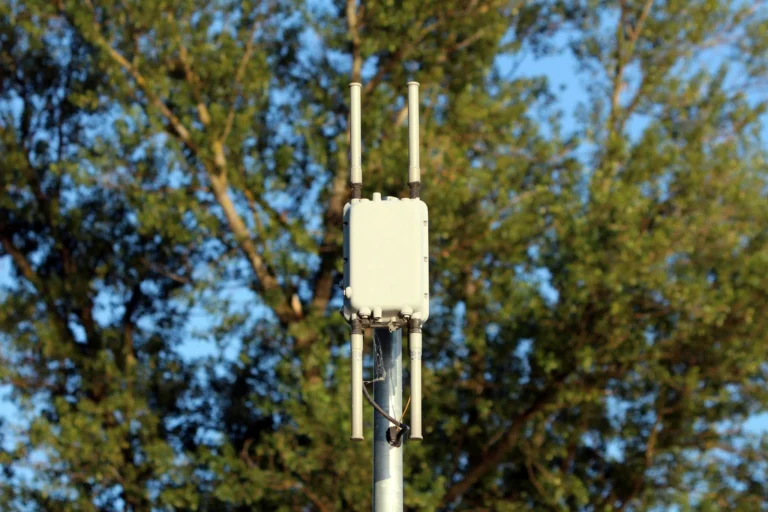
Building MIMO-capable antennas requires solving tough engineering problems. Multiple antennas squeezed into a compact space tend to talk to each other, causing interference. Designers use decoupling techniques, parasitic elements, and careful placement to keep isolation above 15 dB. Antennas like the AW-MM2425-2×15 2.4-2.5 GHz MIMO Antenna (2×15 dBi) integrate high-gain elements in a single radome, ensuring low correlation between ports. For larger installations, 4×4 MIMO antennas such as the AW-MM2425-4×15 2.4-2.5 GHz MIMO Antenna (4×15 dBi) further multiply capacity. Envelope correlation coefficients must be near zero to enable true spatial diversity. The planar form factor eases integration into routers, base stations, and IoT gear.
Isolation and Correlation: The Critical Duo
Isolation measures how much energy leaks from one antenna element to another; high isolation prevents signal bleed that would muddle the distinct streams. Correlation quantifies how different the radiation patterns are; low correlation means each antenna ‘sees’ a slightly different propagation path, making spatial multiplexing effective.
The Rise of Multi-Band MIMO
Modern devices must juggle Wi-Fi, cellular, Bluetooth, and more. Multi-band MIMO antennas, such as those operating at 2.4 GHz and 5 GHz concurrently, or across sub-6 GHz 5G bands, collapse what used to require multiple antennas into one. Recent designs highlight triple-band units covering 700 MHz, 3.5 GHz, and 5 GHz, supporting both broad coverage and high capacity. This integration saves valuable board real estate in smartphones and small cells, while simplifying assembly and reducing cost.
Tomorrow’s MIMO: Massive and Adaptive
The trajectory points toward massive MIMO in 6G, with hundreds of antennas per array, and reconfigurable intelligent surfaces that steer beams dynamically. Sub-6 GHz spectrum will remain the foundation for coverage, while mmWave bands add capacity in dense areas. The core principles of MIMO—spatial multiplexing and diversity—will continue to underpin wireless evolution. As antennas shrink and multiplexing gains grow, one question lingers: how close to the theoretical Shannon limit can real-world MIMO systems push before physical constraints force a new paradigm?
Why This Matters
By multiplying data capacity without new spectrum, MIMO directly impacts the economics of network deployment. It allows operators to serve more users with existing frequencies, lowering cost per bit. As demand for mobile video, IoT, and real-time applications climbs, MIMO's efficiency gains are indispensable for sustainable network growth.
FAQ
Why does MIMO improve data speeds without using more spectrum?
MIMO exploits multiple antennas to send independent data streams over the same frequency channel at the same time, using spatial multiplexing. Instead of a single pipe, it creates several parallel pipes, each carrying data, thereby multiplying throughput without needing extra bandwidth.
How many antennas do I need for MIMO?
MIMO requires at least two antennas at both transmitter and receiver. Common configurations are 2×2, 3×3, or 4×4. Higher numbers (like 8×8) are used in some routers and base stations, with gains scaling with the minimum number of antennas on either end.
What’s the difference between SU-MIMO and MU-MIMO?
SU-MIMO (Single-User) dedicates all streams to one device at a time. MU-MIMO (Multi-User) allows an access point to communicate with multiple devices simultaneously over different spatial streams, improving overall network efficiency and reducing latency for connected users.
Does MIMO work with both Wi-Fi and cellular networks?
Yes, MIMO is a fundamental technology used in Wi-Fi 4 (802.11n) and later, and in 4G LTE and 5G NR. Cellular base stations often employ 'massive MIMO' with many antennas to serve numerous users in a cell, while Wi-Fi routers typically use up to 8 antennas.
Sources
Related news: Triple-Band MIMO Antenna Advances Sub-6 GHz Wireless Technology