
How Massive MIMO Transforms 5G Network Capacity
By the Numbers
This story is anchored to specific dates or periods such as 2035. Those reference points make it easier to track how the situation develops over time.
- Date / period: 2035 Sources gsma.comgrandviewresearch.comfcc.gov Related news: Radio Antennas Market Poised for Significant Growth by 2035 Driven by 5G and IoT Expansion
Massive MIMO multiplies spectral efficiency by serving dozens of users simultaneously on the same frequency, forming the backbone of 5G’s capacity promise.
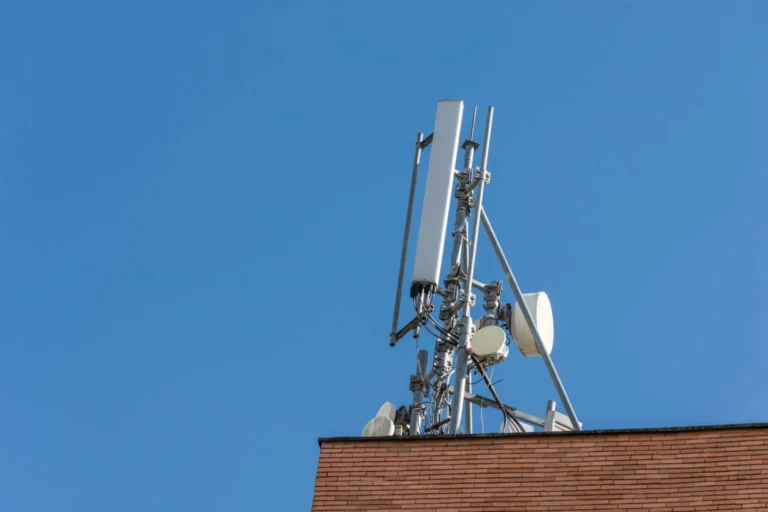
Traditional cellular base stations rely on a handful of antennas, but massive MIMO arrays deploy dozens to hundreds of individually controllable elements. This density unlocks two transformative techniques: beamforming and spatial multiplexing. Beamforming concentrates radio energy into narrow, user-specific beams, dramatically reducing interference and extending range. Spatial multiplexing sends multiple independent data streams over the same time-frequency resource, multiplying total throughput without additional spectrum.
The Engineering Behind Massive MIMO
As antenna counts rise, signal processing complexity increases, but the benefits are substantial. Key mechanisms include:
- Beamforming steers radio energy toward specific users, improving signal quality and reducing wasted power.
- Spatial multiplexing enables several users to share the same frequency block, raising sector capacity linearly with the number of antennas.
- Channel hardening emerges when the number of antennas grows large, smoothing out fading and making the wireless channel more predictable.
- Sub-6 GHz bands are the primary playground for massive MIMO because antenna spacing remains physically manageable while offering favorable propagation.
The surge in 5G antenna deployments underscores the need for high-performance components. For outdoor urban cells, compact panel arrays are common, while fixed wireless access often demands directional high-gain solutions like the AW-PA5158-V18B65 5.1-5.9 GHz Directional Panel Antenna (18 dBi). In mid-band networks operating around 3.5 GHz, antennas such as the AW-PA3338-V18B65 3.3-3.8 GHz Directional Panel Antenna (18 dBi) become essential to achieve the required link budget.
Integrating Massive MIMO into Live Networks
Network operators must manage the intricate coordination of massive MIMO, which relies on advanced signal processing and precise synchronization. The antenna arrays are typically integrated with remote radio units, creating active antenna systems that demand meticulous calibration and continual optimization. Radio propagation assessments become more critical as network planners balance coverage, capacity, and interference across dense urban landscapes.
Spectrum policy also shapes antenna design. C-band and other mid-band allocations have emerged as powerful enablers, blending range with high capacity. Governments and regulators are actively opening additional frequency ranges, such as 6 GHz, to accommodate future massive MIMO expansions. Meanwhile, the move toward open RAN architectures diversifies the supplier base, giving operators more flexibility in sourcing and deploying antenna systems.
From dense urban centers to fixed wireless links, massive MIMO antennas underpin the gigabit speeds, low latency, and network densification that define 5G.
Why This Matters
By multiplying spectral efficiency without requiring additional spectrum, massive MIMO directly addresses the exponential growth in mobile data traffic. It enables network densification, reduces costly infrastructure expansions, and improves user experience through faster speeds and lower latency, making it a cornerstone of 5G and future 6G architectures.
FAQ
Why is massive MIMO crucial for 5G capacity?
Massive MIMO uses large antenna arrays to serve many users at once on the same radio channel, drastically boosting the data throughput of a cell. It enables 5G networks to meet the demands of dense urban areas and data-heavy applications without needing extra spectrum.
How does massive MIMO improve spectral efficiency?
Through spatial multiplexing, massive MIMO sends independent data streams to multiple users in the same time-frequency slot. Beamforming concentrates energy precisely, reducing interference and allowing more users per cell, which can multiply spectral efficiency by ten times or more compared to 4G.
What are the antenna requirements for massive MIMO?
Massive MIMO arrays require co-located antenna elements with precise phase and amplitude control, typically arranged in panels. The antennas must support wide bandwidths, high isolation, and beamforming calibration, and they are often integrated with radio units to form active antenna systems.
How does beamforming work in 5G massive MIMO?
Beamforming adjusts the signal phase and amplitude at each antenna element to steer a focused beam toward a specific user. This reduces power wasted in unwanted directions, minimizes interference, and enhances the signal strength at the receiver, especially at cell edges.
Sources
Related news: Radio Antennas Market Poised for Significant Growth by 2035 Driven by 5G and IoT Expansion