
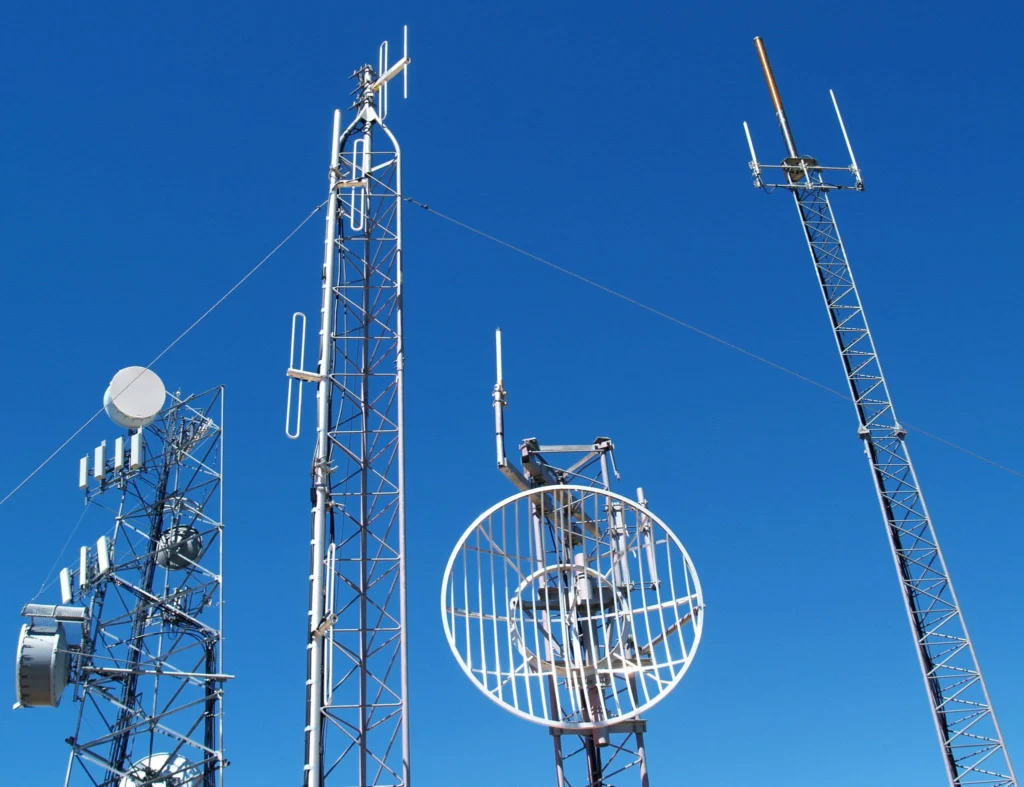
UHF RFID antennas operate in the 902-928 MHz (US) and 865-868 MHz (EU) bands and use circular or linear polarization to energize passive tags reliably regardless of tag orientation.
Overview
Understanding rfid antennas starts with the physics of the band, then moves through pattern, gain, mounting and the practical constraints of a live deployment. Read range is governed by the reader EIRP limit and tag sensitivity; circularly polarized panels trade about 3 dB of gain for orientation-independent reads, which is usually the right choice for mixed-orientation inventory.
Frequency Bands and Spectrum
The bands most relevant to rfid antennas are listed below. Each band brings different propagation, regulatory and antenna-size implications.
| Band | Range (MHz) | Typical use |
|---|---|---|
| 902-928 MHz ISM | 902-928 | US ISM / LoRa / RFID |
| 800-960 MHz Cellular | 806-960 | GSM-900 / cellular |
Recommended Antenna Types
The following antenna classes are best matched to rfid antennas:
Directional Panel Antenna
Sector / panel antennas delivering focused gain over a defined azimuth, used for base-station sectorization and fixed point-to-multipoint links.
Wall-Mount Patch Antenna
Low-profile flat-panel antennas for indoor or outdoor wall installation with moderate directional gain.
Applications and Use Cases
RFID Antennas support a range of deployments. The most common are:
- IoT / M2M
- Asset Tracking
- Cellular Coverage
Mounting and Installation
Portal and dock-door antennas are wall- or frame-mounted and aimed to define a controlled read zone; overhead antennas use ceiling mounts.
Lightning Protection and Grounding
Most RFID antennas are indoor and require no lightning protection; outdoor yard-management deployments should follow standard surge-protection practice.
Standards and Compliance
Designs and deployments in this area commonly reference:
- EPC Gen2 / ISO 18000-6C
- FCC Part 15
- ETSI EN 302 208
Selection and Comparison
When narrowing down a model for rfid antennas, weigh these trade-offs:
- Circular vs. linear polarization
- Near-field vs. far-field
- Read-zone confinement
Typical gain for this category is 6-12 dBic, usually terminated in a N-Female or RP-TNC connector, though the interface can be customized.
Recommended Antennas from astronwireless.com
The following models from our catalog match the requirements discussed above:
AW-PA8090-V12B65
- Band: 806-960 MHz
- Gain: 12 dBi
- Polarization: Vertical
AW-PA8090-V15B65
- Band: 806-960 MHz
- Gain: 15 dBi
- Polarization: Vertical
AW-PA8090-V18B65
- Band: 806-960 MHz
- Gain: 18 dBi
- Polarization: Vertical
AW-PA8090-X2x15B65
- Band: 806-960 MHz
- Gain: 2x15 dBi
- Polarization: Dual ±45° slant
AW-PA7090-V10B120
- Band: 698-960 MHz
- Gain: 10 dBi
- Polarization: Vertical
AW-PA7090-V11B90
- Band: 698-960 MHz
- Gain: 11 dBi
- Polarization: Vertical
Related Topics
Find Your Antenna
Specify your exact requirements and get a matched recommendation:
Antenna Configurator
Specify your requirements and get a matched antenna recommendation in seconds.
Advanced filters (dimension limits)
RFID Antennas in depth
The pages below break rfid antennas down by band, by antenna class, by application and by how the antenna gets mounted, each with the catalog models that apply.
By frequency band
By antenna type
- Directional Panel Antenna for RFID AntennasSector / panel antennas delivering focused gain over a defined azimuth, used for base-station sectorization and fixed point-to-multipoint links. This…23 models
- Wall-Mount Patch Antenna for RFID AntennasLow-profile flat-panel antennas for indoor or outdoor wall installation with moderate directional gain. This page covers how the class behaves…5 models
By application
- Antennas for IoT / M2MIoT / M2M places its own demands on the antenna: the link budget, the interference environment and the physical install…62 models
- Antennas for Asset TrackingAsset Tracking places its own demands on the antenna: the link budget, the interference environment and the physical install all…11 models
- Antennas for Cellular CoverageCellular Coverage places its own demands on the antenna: the link budget, the interference environment and the physical install all…6 models
By installation
- RFID Antennas accessory / componentMounting decides more of the delivered performance than the datasheet gain does. This page covers accessory / component installs for…80 models
- RFID Antennas outdoor, pole-mountedMounting decides more of the delivered performance than the datasheet gain does. This page covers outdoor, pole-mounted installs for rfid…39 models
- RFID Antennas desktop / handheldMounting decides more of the delivered performance than the datasheet gain does. This page covers desktop / handheld installs for…17 models
Selection and reference
- How to Choose RFID AntennasChoosing rfid antennas is a sequence of constraints, not a search for the highest number on the datasheet. Band comes…
- RFID Antennas Specification ComparisonA side-by-side table of every rfid antenna in the catalog, sorted so the gain-versus-size trade-off is visible at a glance.…
- RFID Antennas: Common QuestionsThe questions that come up most often in rfid antennas enquiries, answered with the numbers rather than with generalities.